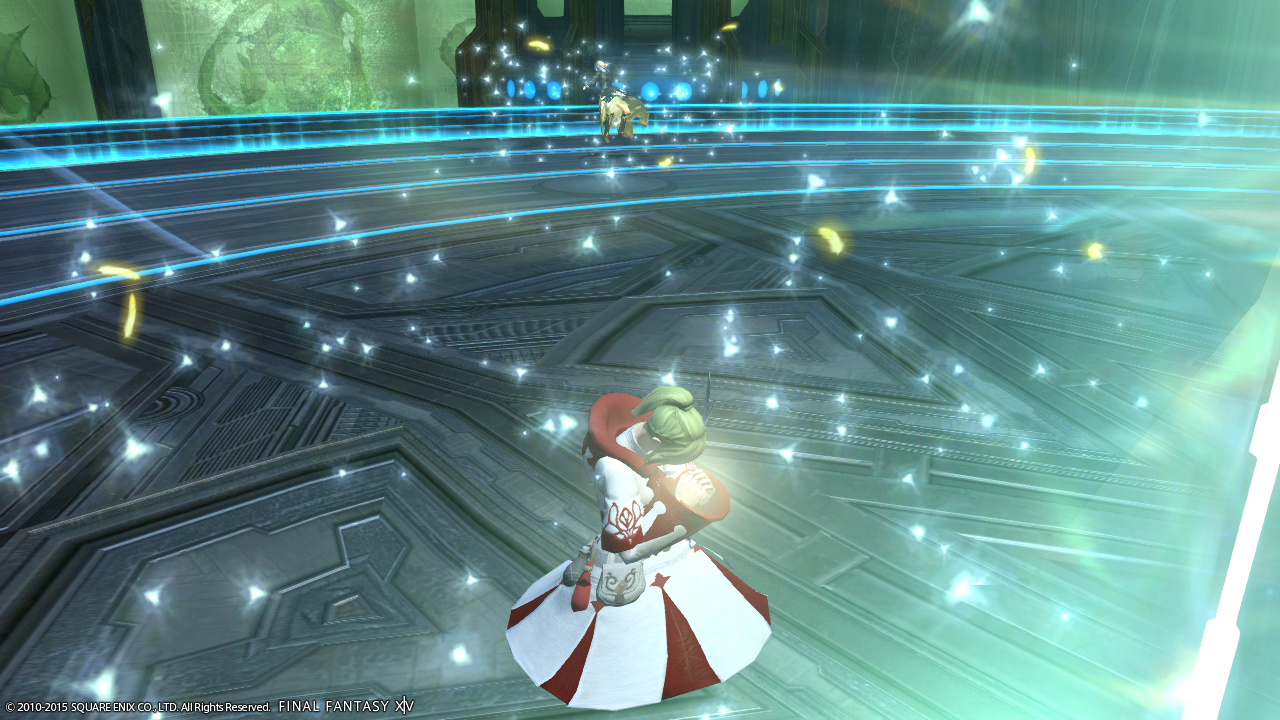
I’ve always been a lifelong healer main. My first D&D character was a druid, casting Cure Light Wounds and Goodberry while my Wolf did the hard work. I played a Holy Paladin in the early days of WoW, a White Mage in Final Fantasy 14. Whenever I played a hero shooter or moba, I’d naturally find my lane as a support. I always had a certain affinity with the healer characters in various RPGs. The Marles, the Daggers, the Yunas, the Lunas, the Billys, the Finas. I hated when I was missing a Vestal in my Darkest Dungeon parties. My XCOM squads were never complete without both a medkit and a backup medkit. I played a Bard in Baldur’s Gate 3 kitted out with tons of bonus healing equipment. It’s just been a part of my gaming DNA for as long as I can remember.
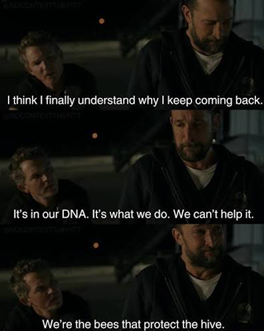
And I know I’m not the only one, so I started thinking about why this is, because honestly, playing a healer can really suck sometimes. And yet, in spite of that for the healing/support mains among us, we keep coming back. There’s just something deeply satisfying and fulfilling about playing this role. I think as Dr. Abbott says at the end of the first season of The Pitt, “It’s what we do. We can’t help it. We’re the bees that protect the hive.”
It can be really stressful to be a healer! And when everything’s going well, no one really notices you’re there. When you save the DPS from dying to an avoidable mechanic with a clutch heal, when your thoughtful preparation meant your tank had a higher armor class than normal so they didn’t even take damage, when you’re juggling cooldowns and map awareness and still have time to direct the team to an opportunity because you’re like Neo seeing through the code to the path to victory laid out before you, and then you hear someone else get commendations for their massive killstreak, it can feel like a hollow victory sometimes. And heaven forbid things go wrong: an interrupted resurrection, a misclick using the wrong cooldown, or just not being able to keep up with the party’s mistakes when they’re still learning a fight, it’s often just a healer skill issue, even though we know that’s not the whole truth. But when the party is dropping into critical health, and you pull out a well-timed ultimate and turn the tide of battle in your team’s favor, that’s a high that only a healer can know.
It’s in this disconnect that led me to wanting to make a game about healing. It’s a role I love to play very very much, but I couldn’t really think of a game where I felt that healing was consistently done well, and not a single game that had addressed all of the core problems I’ve found with healing in games, and I wanted to work on something that had the opportunity to both celebrate and elevate a role I love so much. So there’s a few key areas we’re currently exploring in the prototyping and concepting phase:
Opportunities & Decisions: A healer should have enough tools to solve the problems presented by an encounter, but not so many tools that they don’t have to get creative with their triage process and decision making. When I played 3rd edition D&D, I had to decide: do I want to prepare a healing spell, or do I want to prepare a damage spell? What happens if a party member goes down and I can’t heal them because I took Speak with Animals instead? I’d be anxious to use the mana of favorite healing characters in JRPGs on anything other than healing without knowing how long the dungeon was, because everyone can do damage, but only the healer can heal. This puts a lot of pressure on the player to play conservatively and not always in a way that’s most rewarding. So The Healer’s Journey needs to balance the eustress of performing triage with your abilities, but not make it feel like you can’t do the “fun” part of the game.
It’s that very reason that our protagonist won’t be able to deal damage directly to enemies, you’ll be relying on keeping your NPC party in prime condition so they can fight more effectively on your behalf. Forcing that restriction on the game’s design either means we have make healing intrinsically awesome.
Removing ambiguity: A healer should have a crystal-clear understanding of how effective they are at healing. If your DPS was able to keep their rotation up at a critical moment because you healed them despite them standing in the fire, it should be clear that extra damage was a result of your actions, right? When you play a damage dealing class, it’s really clear how what you did contributed to the fight. MMOs have damage logs, action games have rating screens, but healers have no way to really see how their actions contributed to the overall speed or success of the encounter. We want The Healer’s Journey to celebrate when you’re
Game feel: We have tons of techniques as game developers that make hitting things feel good: screen shake, hit pause, hit vfx, audio, hit reactions, all these things go into when you hit something, it feels satisfying and you get immediate feedback that you did a good job. You also get immediate feedback you’re doing a bad job, a lack of those satisfying signals might indicate you’re using the wrong weapon type, the wrong elemental affinity, or whatever, and you can correct your playstyle and start doing damage again. Healing has nice green numbers that pop up over someone’s head when you heal them, and while that’s nice and all, it doesn’t always feel as good or engaging as what other archetypes get to experience. It’s why at a first glance, healing can feel simple, or boring (Especially when the healer’s skills aren’t being taxed), because the moment-to-moment game experience can feel kinda flat at times.
But it’s not going to be fun to heal someone and have the camera shake and have them play a bespoke “I got healed animation” - those hit techniques just don’t translate to healing very well. But thankfully, good game feel doesn’t have to come from combat, it can also come from movement. Just running around and jumping in a Mario game can be delightful, even without any obstacles around. So that lead me to a question that sparked a lot of our initial prototyping and exploration: what if we started coupling healing abilities with fun movement techniques? What new design space might that open up?
That’s basically the primary focus of the current prototyping effort: how do we keep the fun, skill testing resource management and triage aspect of healing, while incorporating it with some more moment to moment movement mechanics for those natural bits of downtime when you don’t have to heal anyone, without everything feeling too overwhelming? Trying to strike that balance between giving you too many things to keep track of and not enough things to do of is really hard, especially at this early stage when literally the sky is the limit. But recently I’ve started to be able to squint a little bit and think that maybe I’m finally starting to be onto something, and that gives me a lot of hope to keep pushing forward.
If this is exciting to you or you just want to help an excited indie dev, we’d love to get your perspective on what makes healing fun (or not fun) for you! We have a survey you can take that will help us better understand our audience, and it would help us a ton if you took a couple minutes to respond <3 https://forms.gle/nQEy13ptKzFRT6268
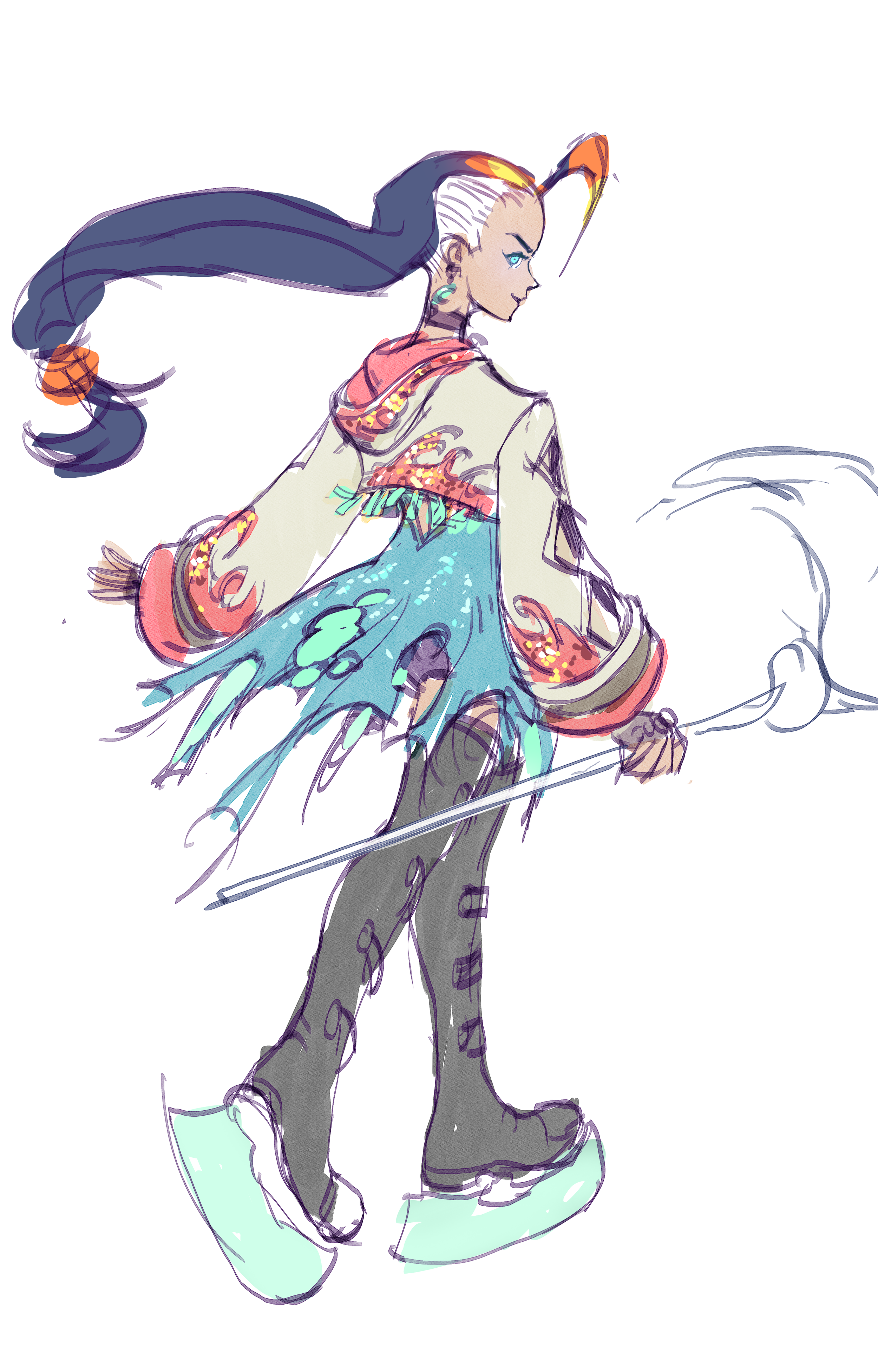
I’ll leave you with a little bit of very early character art that we’ve been playing around with. Next time I’ll talk more about why she has some cool ice skates on her boots :)
<3 Brie